


Most people naturally enjoy two things: saving money and rewarding themselves.
In Australia, certain rewards, loyalty benefits and non-cash perks can allow you to do both — often without triggering additional tax obligations, depending on how they are earned and used.
Rather than earning additional income (and paying tax on it), these programs can help reduce out-of-pocket costs by allowing you to use points or rewards for upgrades and benefits in place of cash.
This article explores how these rewards work, when they are generally not taxable, and how individuals and business owners can maximise their value while remaining tax compliant.
What Are Non-Cash Rewards and Benefits?
Non-cash rewards typically arise through:
- Credit card spending,
- Loyalty programs,
- Promotional incentives,
- Everyday purchases.
Instead of receiving income directly, you may receive:
- Points,
- Flight upgrades,
- Gift cards,
- Cashback or credits.
The tax treatment depends largely on why and how the rewards are earned.
Common Examples of Rewards in Australia
Common programs include:
- Airline loyalty programs (e.g. frequent flyer points);
- Credit card rewards programs;
- Bank and retail cashback offers;
- Travel and hotel loyalty programs;
- Supermarket and fuel rewards programs.
When used strategically, these programs can deliver meaningful savings over time.
Real-World Examples: Turning Everyday Spending into Meaningful Savings
Changing how you make everyday purchases — whether it’s fuel, clothing or technology — can have a meaningful impact on your points balance over time.
We spoke to an individual with expertise in maximising loyalty program rewards, who highlighted practical ways to increase points accumulation without increasing overall spending.
She suggested redirecting planned purchases through rewards platforms rather than purchasing directly, particularly for non-grocery items such as clothing, furniture and electronics. Her approach is outlined below.
A Smart Approach to Maximising Points and Rewards
This approach is simple but effective. Instead of purchasing directly from a retailer, whether online or in-store, the purchase is made via a rewards platform that partners with a wide range of brands.
In many cases, this allows you to earn multiple points per dollar spent — sometimes as high as 10 points per dollar, depending on the retailer and promotional period.
Importantly:
- The purchase itself doesn’t change;
- You are still buying from the same brand or retailer;
- The price is generally the same;
- But the additional points can translate into real savings over time.
Experienced loyalty program users often adopt such strategies to get more value from their existing spending. This involves restructuring your buying habits to maximise rewards:
- Research the product online.
- View it in-store where relevant.
- Complete the purchase through a rewards platform to ensure points are captured.
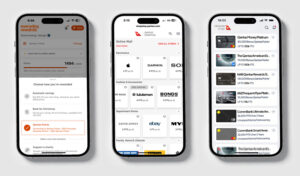
For example, platforms such as the Qantas Shopping portal provide access to a wide range of retailers while allowing points to be earned on purchases that were already planned.
Over time, these points can be used for flights, upgrades, shopping through the platform, as well as other benefits.
They can also be exchanged for gift cards with your preferred retailer — effectively turning points into everyday savings and reducing the amount of cash you would otherwise spend.
Moreover, when shopping via a rewards platform, using a credit card with its own rewards program allows you to earn that card’s points independently of any points earned through the platform, provided the purchase is made using that card.
Leveraging Sign-Up Offers and Financial Products
Many financial institutions offer reward-based products, including credit cards, loans, and other financial services.
In some cases, a substantial number of points may be earned through:
- Sign-up bonuses when opening a new account or product.
- Meeting minimum spend requirements within a specified period.
- Promotional offers linked to specific products (such as credit cards, personal loans or home loans).
When used carefully, these offers can provide a strong starting balance of points and accelerate access to meaningful rewards.
For example, banks may offer tens of thousands of reward points as part of a limited-time sign-up bonus when applying for a new credit card, personal loan or home loan. These offers are typically promotional and can change over time, with varying eligibility criteria and conditions.
However, it is important to consider the overall cost, including fees and interest, to ensure the product fits your financial situation and goals.
Using a Loyalty Program Ecosystem to Maximise Rewards
Some programs let you consolidate multiple areas of spending into a single rewards ecosystem.
These may include:
- Groceries;
- Fuel;
- Insurance;
- Utilities and partner services;
- Travel and accommodation.
By linking everyday expenses into one system, points can accumulate more consistently — without increasing overall spending.
This structured approach can lead to more predictable and meaningful savings over time.
Experienced loyalty program users also suggest choosing platforms that allow points to be transferred between loyalty programs, enabling you to maximise your rewards and use them where they provide the greatest benefit at any given time.
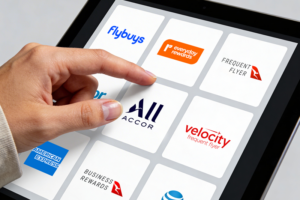
For example, programs such as Everyday Rewards allow points to be transferred to partner programs such as Qantas, including the option to automatically convert points once a certain threshold is reached. Similarly, some travel loyalty programs, such as ALL – Accor Live Limitless, may also offer transfer options to airline partners. In addition, some credit card reward programs provide flexible redemption options, allowing points to be used for cashback, gift cards or travel, depending on individual preferences.
This flexibility allows you to move points between programs and use them where they provide the greatest benefit. However, it is important to review transfer rates and redemption value, as the outcome can vary depending on how and where the points are ultimately used.
Tax Treatment of Rewards and Loyalty Points in Australia
When Rewards and Points Are Not Taxable
In many cases, rewards are not subject to tax where:
- They are earned through personal spending.
Where rewards are earned as a result of personal, everyday spending, they are generally not treated as taxable income. The Australian Taxation Office (ATO) considers these benefits to arise from a personal contractual relationship between the individual and the loyalty program provider, rather than from an income-producing activity. As a result, points earned from personal purchases — such as groceries, travel or household expenses — are typically not assessable. - They are incidental or promotional in nature.
Rewards that are provided as part of standard promotional or loyalty programs are generally considered incidental benefits. This means they are viewed as a by-product of spending, rather than something earned in place of income. For example, receiving points, discounts or upgrades as part of a customer loyalty program is usually not taxable, as these benefits are designed to encourage consumer behaviour rather than compensate for services or work performed. - They are not directly linked to income-earning activities.
A key factor in determining tax treatment is whether there is a connection between the reward and an income-earning activity. Where rewards are not earned in the course of running a business, providing services, or as part of an employment arrangement, they are generally not taxable. However, if rewards arise from business activities or are closely connected to generating income, the ATO may treat them differently, particularly where they can be considered a non-cash business benefit.
When Tax May Apply to Rewards and Loyalty Points
Tax implications are more likely to arise where one or more of the following factors are present:
- The rewards are earned as part of an income-earning activity or business relationship;
- The arrangement is linked to employment, including where an employer facilitates or allows the accumulation of points;
- The benefits are considered a substitute for income or remuneration;
- The arrangement is deliberate or structured primarily to generate rewards, rather than being driven by genuine spending needs;
- A substantial volume of points is accumulated (for example, in the hundreds of thousands annually), indicating the activity may not be incidental;
- The rewards are converted into cash or cash-equivalent benefits in connection with income-earning or employment activities.
If you are earning points or using rewards through business activities, employment arrangements, or high-volume spending, it is important to understand how the rules apply to your specific circumstances.
Our team can help you assess your situation and ensure you are making the most of available benefits while remaining compliant. Speak to us for clear, practical guidance on managing rewards and loyalty programs in line with your broader financial position and compliance requirements.